

News
The Alchemist’s Fire: How to Make Silicon Carbide Ceramic

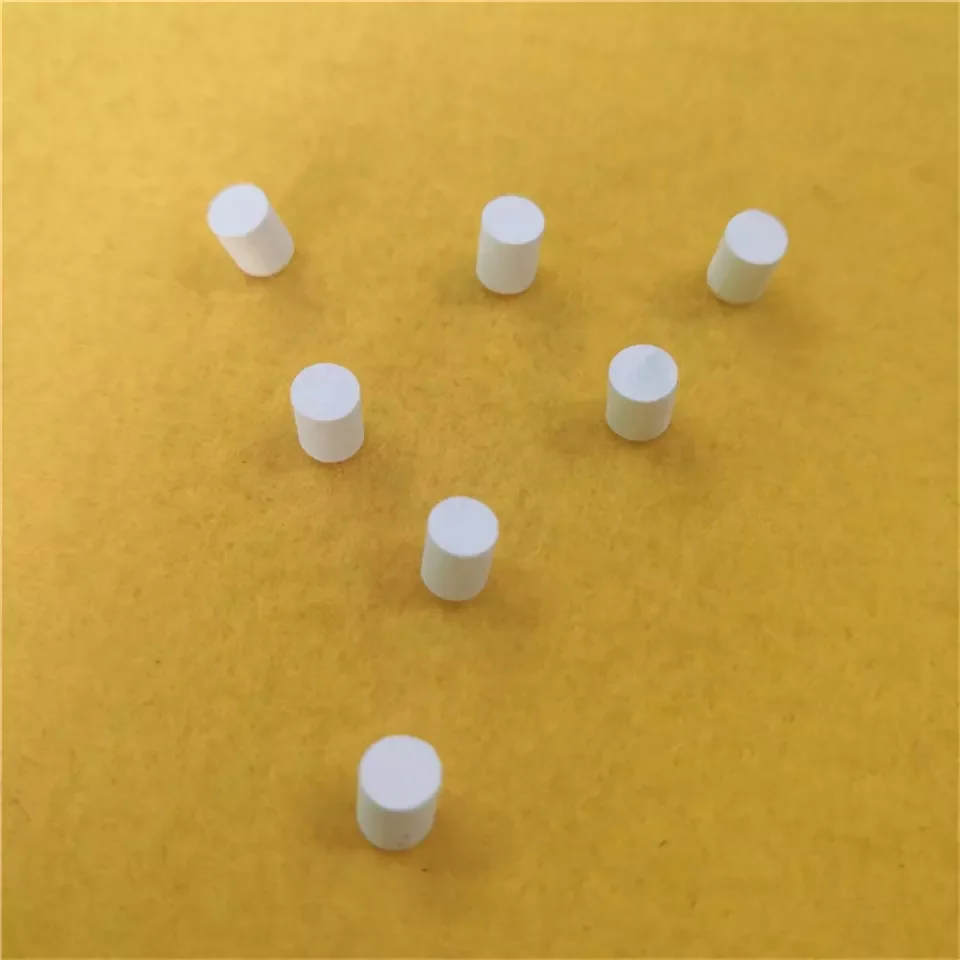
In the world of advanced material science, few materials command as much respect as Silicon Carbide (SiC) ceramic. Known for its diamond-like hardness, extreme thermal shock resistance, total chemical immunity, and ability to withstand temperatures that would melt steel, SiC is the undisputed heavyweight champion of technical ceramics. From ballistic armor plates and high-speed mechanical seals to critical semiconductor wafer trays, this material is the backbone of extreme engineering.
But how exactly do we create a material that doesn’t exist naturally on Earth in significant quantities?
Making silicon carbide ceramic is a triumph of modern thermodynamics, bridging the gap between raw chemical reaction and precision sub-micron engineering. In this article, we will pull back the curtain on the multi-stage manufacturing process that turns raw sand and carbon into an indestructible industrial powerhouse.
Stage 1: Forging the Raw Material (The Acheson Process)
Because natural silicon carbide (the mineral moissanite) is incredibly rare, found only in trace amounts within meteorites, every ounce of industrial SiC must be synthesized from scratch.
The journey begins with the Acheson Process, a method invented in 1891 that remains the foundational cornerstone of raw SiC production today:
- The Raw Mixture: High-purity silica sand ($\text{SiO}_2$) and petroleum coke (carbon, $\text{C}$) are mixed together in precise ratios. Sawdust and salt are often added to the mixture; the sawdust creates porosity to allow gases to escape, while the salt helps react out metallic impurities.
- The Electric Resistance Furnace: This massive raw mixture is packed around a central graphite core inside an open-air electric furnace.
- The Sublimation Reaction: A massive electrical current is passed through the graphite core, heating the surrounding mixture to scorching temperatures between $1700^\circ\text{C}$ and $2500^\circ\text{C}$. At this extreme heat, a solid-gas chemical reaction takes place:$$\text{SiO}_2 + 3\text{C} \rightarrow \text{SiC} + 2\text{CO} \uparrow$$
- Harvesting the Crystals: As the furnace cools over several days, a massive crust of iridescent, colorful silicon carbide crystals forms around the core. This crude SiC is harvested, crushed, milled, and chemically washed to create ultra-fine, sub-micron silicon carbide powders.
Stage 2: Shaping the Ceramic (Green Body Formulation)
Raw SiC powder cannot simply be melted and poured into a mold like iron; it has no true liquid melting point at standard pressures and sublimates directly into gas at ultra-high temperatures. To shape it, engineers must create a “Green Body” (an unfired, fragile compact of compressed powder):
- Formulation: The fine SiC powder is blended with specialized organic binders, lubricants, and sintering aids (such as boron or carbon).
- Shaping Methods: Depending on the geometry of the final part, the mixture is shaped using various ceramic forming techniques:
- Dry Pressing / Isostatic Pressing: The powder is packed into a mold and subjected to massive mechanical pressure, compressing it into a dense block or ring.
- Slip Casting / Injection Molding: The powder is mixed into a liquid slurry and poured or injected into complex molds to create intricate shapes like pump impellers or nozzles.
Stage 3: The Metamorphosis (The Sintering Process)
The fragile green body is now ready for the most critical phase of manufacturing: Sintering. This is where the loose powder particles fuse together at an atomic level to form a dense, monolithic ceramic structure.
Depending on the desired properties and budget, manufacturers utilize two primary technical routes:
Method A: Sintered Silicon Carbide (SSiC)
This method produces the highest-purity and most durable grade of SiC. The green body is placed inside a vacuum or inert gas (argon) furnace and heated to roughly $2000^\circ\text{C}$ to $2200^\circ\text{C}$. Under this intense heat, solid-state diffusion occurs. The atoms migrate across particle boundaries, shrinking the voids and fusing the powder into a completely solid crystal lattice with virtually zero porosity.
Method B: Reaction Bonded Silicon Carbide (RBSiC / SiSiC)
For large-scale or highly complex components, solid-state sintering can cause unpredictable shrinkage. To avoid this, engineers use reaction bonding. A green body composed of SiC powder and carbon powder is heated to around $1400^\circ\text{C}$ to $1600^\circ\text{C}$ while in contact with molten liquid silicon. The liquid silicon naturally wicks into the porous body, reacting with the carbon to form new silicon carbide that glues the structure together:
$$\text{Si (liquid)} + \text{C (solid)} \rightarrow \text{SiC}$$
Because there is zero dimensional shrinkage during this process, reaction bonding yields exceptional dimensional precision.
Stage 4: Finishing the Diamond (Diamond Grinding)
Once the sintering cycle is complete, the silicon carbide ceramic emerges from the furnace. At this stage, it is so incredibly hard that it cannot be cut, drilled, or machined using standard high-speed steel or carbide workshop tools.
If the component requires ultra-tight tolerances or a mirror-like finish (such as mechanical seal faces), it must undergo Diamond Machining. Specialized CNC grinders utilizing diamond-tipped abrasive wheels slowly polish, lap, and grind the ceramic to its final, sub-micron tolerances.
Summary of the Production Pipeline
| Manufacturing Stage | Key Action Involved | Core Equipment Used |
| 1. Material Synthesis | Carbothermic reduction of sand and coke | Acheson Electric Furnace ($2500^\circ\text{C}$) |
| 2. Powder Processing | Milling, purifying, and mixing with binders | Ball mills and spray dryers |
| 3. Green Compaction | Pressing or molding into a fragile shape | Isostatic presses or injection molders |
| 4. Thermal Sintering | Atomic diffusion or liquid silicon infiltration | High-temperature vacuum furnaces |
| 5. Diamond Finishing | Final dimensional sculpting and polishing | CNC Diamond-grinding machines |
Conclusion: The Mastery of Matter
Making silicon carbide ceramic is a remarkable demonstration of engineering patience and precision. By harnessing temperatures rivaling the surface of stars and subjecting elemental sand and carbon to intense thermodynamic pressure, material scientists are able to craft a synthetic compound that outlasts almost any natural substance on earth.
While the process requires heavy capital investments and immense thermal energy, the resulting material—immune to wear, heat, and rust—remains an irreplaceable pillar driving the future of advanced global industry.