

News
The Absolute Guide to Cleaning Quartz Cuvettes for CD Spectroscopy

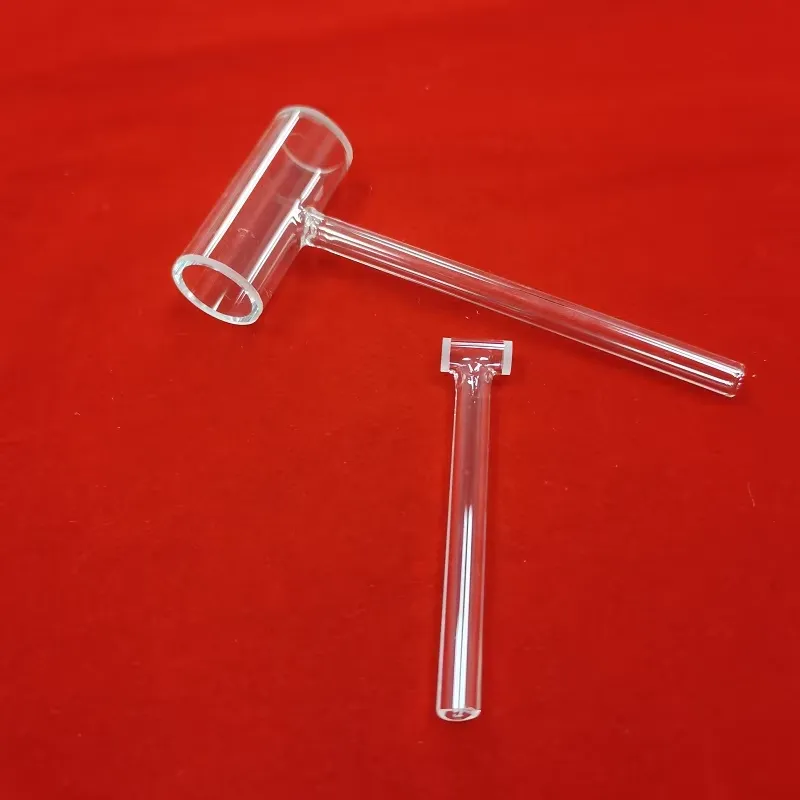
In structural biology and biophysics, Circular Dichroism (CD) spectroscopy is an incredibly powerful tool. It allows us to peer into the secondary structure of proteins, monitor conformational changes, and evaluate macromolecular stability. But if you have ever run a CD spectrum, you know the technique is notoriously sensitive. Because CD measures the tiny difference in absorbance between left- and right-circularly polarized light, even the slightest trace of contamination can completely ruin your baseline.
When working in the far-UV region (190–250 nm), protein residues, buffer salts, and finger oils readily stick to your optical windows. Therefore, mastering the art of cleaning quartz cuvettes for CD spectroscopy is not just good lab practice—it is an absolute requirement for reproducible, high-quality data.
Here is a comprehensive guide to keeping your CD quartz cuvettes structurally pristine and optically flawless.
Why CD Spectroscopy Demands Flawless Cleaning
In standard UV-Vis spectroscopy, minor impurities might cause a slight baseline shift that you can mathematically subtract. CD spectroscopy is not so forgiving.
Residual Protein ➡️ High Absorbance in Far-UV ➡️ Detector Saturation (High HT Voltage) ➡️ Noisy, Corrupted CD Signal
If a previous sample left a microscopic film of denatured protein or surfactant on the quartz window, the total absorbance of the cell climbs dramatically. When the photomultiplier tube (PMT) detector encounters this high absorbance, its High Tension (HT) voltage spikes. Once the HT voltage exceeds safe thresholds (typically above 600–700 V on most CD instruments), the data past that wavelength becomes completely meaningless noise.
Furthermore, quartz cuvettes used for CD often have exceptionally short pathlengths—ranging from $1\text{ mm}$ down to $0.1\text{ mm}$—to minimize solvent absorbance. These narrow gaps create high capillary action, making them exceptionally difficult to rinse and highly prone to trapping trapped micro-bubbles or protein aggregates.
Step-by-Step Protocol: Standard Post-Run Cleaning
For routine cleaning between sample runs of the same protein or daily measurements, follow this gentle yet thorough sequence:
1. Flush Generously
Immediately after your run, remove the sample and flush the cuvette at least 5 to 10 times with Milli-Q or deionized water. Never let a protein sample dry inside a CD cuvette; once denatured and baked onto quartz, proteins are incredibly difficult to strip away.
2. The Detergent Soak
Introduce a dilute (typically 1–2%) solution of a specialized, residue-free laboratory cleaning agent like Decon 90 or Hellmanex III.
- Pro-Tip: Gently warm the solution to 40°C–50°C to accelerate the breakdown of stubborn protein films. Avoid boiling or using harsh scrubbing brushes that can scratch the delicate internal walls of short-pathlength cells.
3. Exhaustive Rinsing
Rinse the cuvette thoroughly with copious amounts of high-purity water to ensure every trace of detergent is gone. Surviving surfactant molecules will exhibit strong CD signals or artifactual peaks in the far-UV spectrum.
4. Volatile Solvent Flush and Dry
Do a final rinse with analytical-grade ethanol or isopropanol (IPA). These volatile solvents displace the water. Use a gentle stream of clean, filtered nitrogen or compressed air to blow-dry the interior. Avoid using compressed air lines that contain industrial oils, as they will instantly coat your quartz in a hydrophobic, UV-absorbing film.
Deep Cleaning Protocols for Stubborn Contaminants
If your baseline is drifting or your HT voltage is abnormally high before you even inject a sample, it is time for a deep chemical clean.
The Nitric Acid Treatment (Highly Recommended for CD)
Nitric acid ($HNO_3$) is the gold standard for removing organic material and protein films from quartz without damaging the fused optical seams.
- Soak the cuvette in 30% to 50% concentrated nitric acid for 1 to 2 hours (or overnight for severe contamination).
- Safety First: Always perform this inside a fume hood wearing appropriate PPE.
- Rinse thoroughly with Milli-Q water afterward.
⚠️ Crucial Warning: Avoid using chromic acid or Piranha solution unless absolutely necessary, as they can aggressively attack the optical bonding material of certain fabricated cuvettes, causing them to fall apart. Never use sonication baths on ultra-short pathlength CD cuvettes, as ultrasonic waves can shatter the fragile, molecularly fused quartz joints.
How to Verify Your Cuvette is Truly Clean
How do you prove your cuvette is clean before risking a precious, low-yield protein sample? Run a water baseline check:
- Fill your clean cuvette with high-purity Milli-Q water.
- Run a CD scan across your target spectrum (e.g., 190–260 nm).
- Check the HT Voltage profile. At 200 nm, the HT voltage should remain low and stable (ideally well below 400 V, depending on your instrument specifications).
- The CD signal should fluctuate tightly around $0\text{ mdeg}$ without any characteristic peaks or severe slopes.
Final Care Rules
- Handle by the Frosted Edges Only: Fingerprints contain lipids and amino acids that absorb heavily at 200–280 nm.
- Ditch the Tissues: Never use standard lab tissues (like Kimwipes) inside the optical path. They shed micro-fibers that scatter light and can easily scratch the interior of a $0.1\text{ mm}$ cell. Use optical lens paper or rely purely on solvent-evaporation drying.
By implementing these strict cleaning protocols, you protect your valuable quartz investments and guarantee that every peak, trough, and shift in your CD spectra is a true reflection of your biology—not your laboratory glass.