

News
The Gold Standard in Far-UV Precision: Why Suprasil Quartz Matters for CD Cuvettes

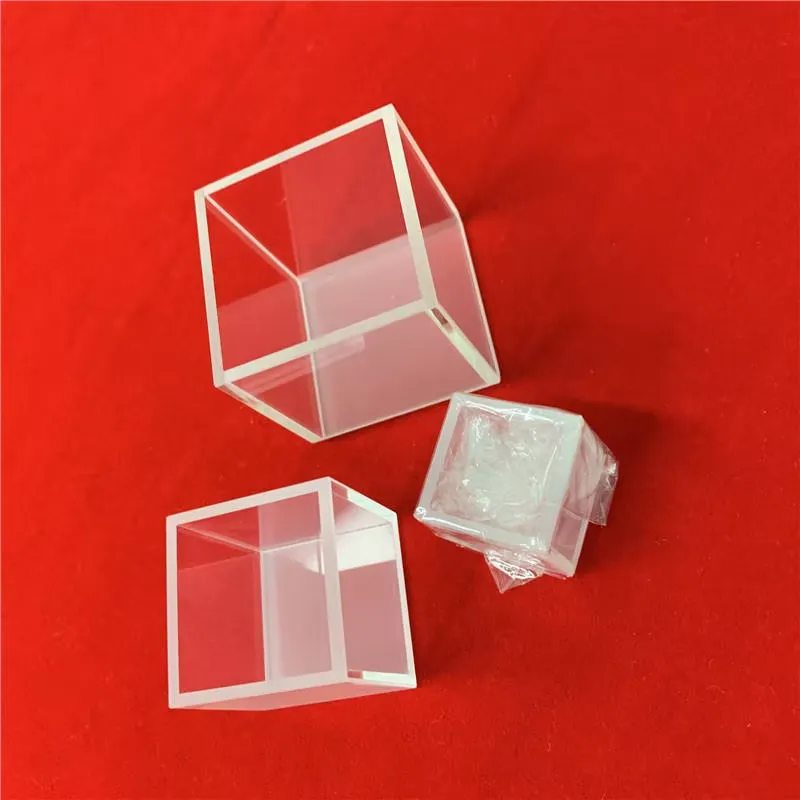
When conducting Circular Dichroism (CD) spectroscopy, you are playing a game of structural whispers. CD measures the incredibly minute differences in the absorbance of left-handed and right-handed circularly polarized light by chiral molecules. Because the structural fingerprints of proteins, DNA, and RNA reside deep within the far-ultraviolet (far-UV) region—often dipping between 190 nm and 220 nm—every single optical component in the light path must be completely flawless.
In this demanding optical landscape, standard quartz is rarely enough. If you look closely at the specifications of high-end CD cells, you will consistently see one premium material specified by top biophysicists: Suprasil quartz.
Let’s dive into the material science of Suprasil quartz for CD cuvettes and discover why it is the ultimate choice for unlocking clean, noise-free biophysical data.
What Exactly is Suprasil Quartz?
Not all quartz is created equal. While standard quartz cuvettes are typically carved from natural fused quartz (refined from mined quartz crystals), Suprasil® is a proprietary brand name held by Heraeus Conamic for a highly specialized class of synthetic fused silica.
Suprasil is manufactured using a chemical vapor deposition (CVD) process. Instead of melting natural rocks, silicon-containing chemicals are synthesized in a flame to create an amorphous silicon dioxide ($SiO_2$) glass. This advanced manufacturing method yields two extraordinary properties that are absolutely crucial for spectroscopy:
- Ultra-High Chemical Purity: It is virtually free of metallic impurities (such as iron, titanium, or aluminum) down to the parts-per-billion (ppb) level.
- High Hydroxyl ($OH$) Content: This molecular structure significantly boosts its ability to transmit light at the extreme lower limits of the ultraviolet spectrum.
Why CD Spectroscopy Demands Suprasil Over Standard Quartz
If you are running standard UV-Vis absorption assays at 280 nm or 340 nm, a standard natural quartz cell works beautifully. However, when you push into the far-UV territory required for determining protein secondary structures (alpha-helices and beta-sheets), natural quartz hits a wall.
Here is why upgrading to a Suprasil quartz CD cuvette makes a profound difference in your data quality:
1. Superior Light Transmission at 190 nm
Natural quartz begins to absorb ultraviolet light significantly as you drop below 220 nm due to trace metallic impurities trapping the photons. Suprasil quartz, however, maintains excellent internal transmittance (up to 80-90%) all the way down to 190 nm, and even exhibits functional transmission down to 170 nm.
By maximizing the amount of light that reaches the detector, Suprasil prevents detector saturation.
Standard Quartz ➡️ High Material Absorbance < 200nm ➡️ Spiking HT Voltage ➡️ Corrupted Noise
Suprasil Quartz ➡️ Near-Zero Material Absorbance < 200nm ➡️ Low, Stable HT Voltage ➡️ Pure Signal
2. Absolute Freedom from Birefringence
Birefringence occurs when a material has a refractive index that varies depending on the polarization and direction of light. Because CD spectroscopy relies entirely on measuring the polarization states of light, any inherent stress or structural asymmetry within the cuvette walls will alter the polarization.
Natural quartz often contains micro-strains from its geological origins. Suprasil, being synthetically grown, is isotropic—meaning its physical properties are perfectly uniform in all directions. It features virtually zero stress birefringence, ensuring that the polarization changes detected by your instrument come entirely from your sample, not the container walls.
3. Exceptional Resistance to Solarization
Deep UV light carries high energy. Over months of exposure to high-intensity xenon arc lamps (the standard light source in CD instruments), lower-grade quartz undergoes a degradation process called solarization. The UV light creates “color centers” inside the glass, causing it to gradually turn cloudy and yellow, which slowly ruins your baselines. Suprasil is highly resistant to radiation-induced solarization, ensuring your cuvette retains its optical clarity over years of continuous operation.
Choosing the Right Structural Design
Because Suprasil quartz is a premium material, cuvettes made from it are a significant financial investment. When sourcing Suprasil cells for CD work, keep these design factors in mind:
- Short Pathlengths are Key: To minimize solvent (water/buffer) absorbance in the far-UV, CD cuvettes typically feature short optical paths, such as $1\text{ mm}$, $0.5\text{ mm}$, or even $0.1\text{ mm}$.
- Demountable vs. Fully Fused: Demountable (two-piece) cells are easier to clean but require meticulous assembly to maintain a precise pathlength. Fully fused, molecularly bonded Suprasil cells offer unparalleled physical stability and zero leak risk, but require precise syringe flushing to clean.
Caring for Your Investment
To preserve the elite optical performance of Suprasil quartz, treat it with extreme care:
- Never Sonicate: Ultrasonic cleaning can shatter the ultra-thin, precision-fused seams of short-pathlength CD cells.
- Chemical Stripping Only: Use 30-50% concentrated nitric acid ($HNO_3$) or specialized optical detergents like Hellmanex III to dissolve stuck proteins.
- Avoid Mechanical Wiping: Never insert rigid tools or standard paper tissues inside the narrow gaps of a $1\text{ mm}$ cell, as micro-scratches will instantly scatter the polarized light beam.
Summary
In CD spectroscopy, you are trying to capture the subtle structural signatures of life at the molecular level. Eliminating background noise is the single most important step to achieving publication-grade data. By investing in Suprasil quartz for your CD cuvettes, you eliminate material absorbance and birefringence at the source—giving your spectrophotometer a crystal-clear window into the true nature of your samples.