

News
Precision Under Pressure: The Critical Role of the Quartz Tube Furnace in Materials Science

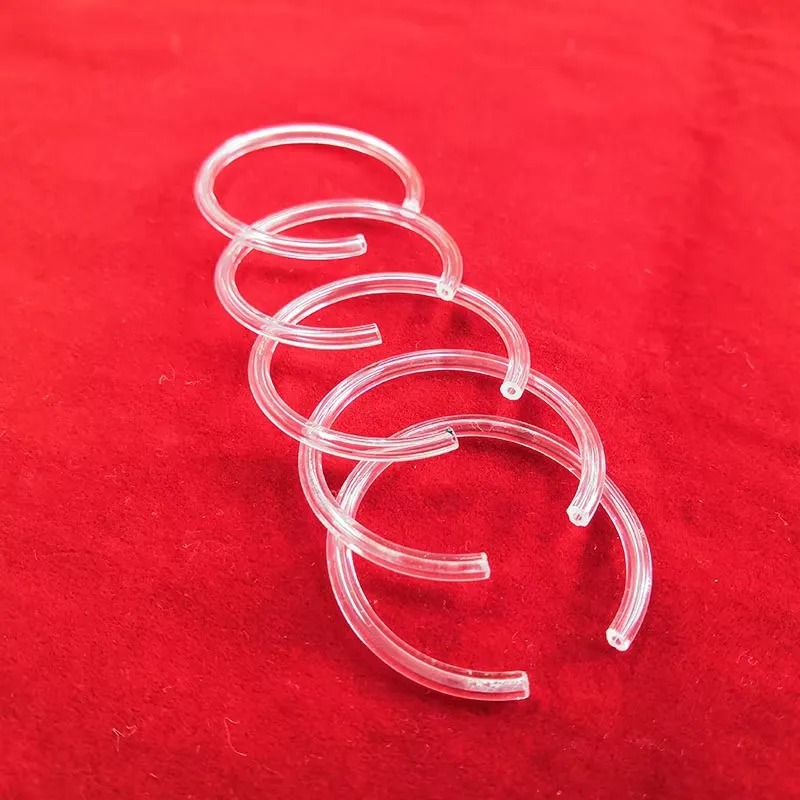
In the world of advanced material synthesis, nanotechnology, and metallurgy, control is everything. Whether a researcher is growing high-purity graphene via chemical vapor deposition (CVD), annealing semiconductor wafers, or sintering advanced ceramics, they require an environment that can reliably sustain extreme temperatures while maintaining total atmospheric purity.
When accuracy cannot be compromised, the quartz tube furnace stands as the ultimate workhorse of the modern laboratory.
Combining precision heating elements with the unique material properties of high-purity fused silica, these furnaces allow scientists to replicate harsh industrial environments on a controllable, laboratory scale. Let’s explore the engineering behind the quartz tube furnace and why it remains an indispensable tool for driving modern technological breakthroughs.
What is a Quartz Tube Furnace?
At its core, a quartz tube furnace consists of a heating chamber (often insulated with high-grade alumina ceramic fiber) wrapped around a central, removable cylindrical processing tube made of high-purity quartz glass.
The sample sits inside this tube, heated externally by radiant energy from heavy-duty resistance wires or silicon carbide ($SiC$) heating elements. This configuration creates a physical barrier between the sample and the heating elements, ensuring that no metallic contaminants or particulate matter from the furnace insulation can off-gas and compromise the purity of the reaction.
The Quartz Advantage: Why Fused Silica Rules the Tube Furnace Market
While tube furnaces can utilize alumina ($Al_2O_3$), graphite, or metallic alloys for their process tubes, quartz remains the premier choice for temperatures up to $1,200^\circ\text{C}$.
The reasoning comes down to three non-negotiable physical benefits of quartz glass:
1. Unmatched Thermal Shock Resistance
Quartz glass possesses an exceptionally low coefficient of thermal expansion ($\approx 5.5 \times 10^{-7}/^\circ\text{C}$). In a tube furnace, temperature gradients between the blistering hot center and the water-cooled sealing flanges at the ends can be massive. While ordinary glass or ceramics would crack under this uneven thermal stress, quartz handles rapid heating and cooling cycles with ease.
2. Excellent Vacuum and Atmospheric Control
Modern materials synthesis rarely happens in plain air. Scientists routinely need to pull a high vacuum ($< 10^{-5}\text{ torr}$) or flood the chamber with precise ratios of inert or reactive gases (like Argon, Nitrogen, Hydrogen, or Methane). Quartz is completely non-porous and highly gas-impermeable, allowing the furnace to maintain airtight atmospheric integrity throughout hours-long processes.
3. Visual Transparency
Unlike opaque ceramic tubes, transparent quartz allows researchers to visually monitor their samples or track structural changes during the heating process. This is particularly valuable during alignment phases or when observing phase transitions in real-time.
Key Configurations: Matching the Furnace to the Recipe
Quartz tube furnaces come in several distinct variations, each engineered to optimize a specific type of material processing:
| Furnace Type | Distinguishing Feature | Best Used For |
| Split-Tube Furnaces | The furnace body hinges open like a clamshell, exposing the quartz tube directly. | Fast cooling cycles; easy insertion and removal of delicate quartz tubes or large samples. |
| Multi-Zone Furnaces | Features two, three, or more independently controlled heating zones along the tube. | Creating precise temperature gradients; vital for vapor transport crystals growth and CVD. |
| Rotary Tube Furnaces | The quartz tube continuously rotates and tilts while heating the material inside. | Processing bulk loose powders, ensuring uniform heat treatment and gas exposure. |
Cutting-Edge Applications Powering Tomorrow’s Innovations
Because of their immense versatility and precise control over temperature and atmosphere, quartz tube furnaces are foundational to several multi-billion-dollar scientific frontiers:
- 2D Materials & Nanotechnology: The growth of carbon nanotubes and 2D materials like graphene relies heavily on CVD tube furnaces. Gaseous precursors are pumped into the quartz tube, where they decompose at high heat and deposit atomically thin layers onto a target substrate.
- Semiconductor Annealing: To alter the electrical properties of silicon or gallium nitride wafers, they must undergo thermal annealing. The quartz tube ensures that zero metallic ions leach into the ultra-clean wafers during the bake.
- Battery Materials R&D: Developing next-generation lithium-ion and solid-state battery anodes requires calcining and carbon-coating raw materials under strict inert gas conditions, a task perfectly suited for a multi-zone quartz tube furnace.
Pro-Tips for Maximizing Quartz Tube Lifespan
While the furnace body itself can last for decades, the quartz process tube is a consumable component that requires mindful maintenance. To protect your investment:
- Respect the Temperature Limits: Standard fused quartz tubes operate safely up to $1,100^\circ\text{C}$ continuously, or $1,200^\circ\text{C}$ for short intervals. Exceeding $1,200^\circ\text{C}$ causes the quartz to undergo devitrification, turning cloudy, brittle, and prone to sagging.
- Avoid Thermal Shock at High Extremes: Though quartz is highly resistant to thermal shock, forcing high-pressure cold air through a tube resting at $1,100^\circ\text{C}$ can still induce mechanical failure.
- Keep it Contaminant-Free: Alkaline metals (like Sodium or Potassium) act as catalysts for quartz devitrification. Always handle the tube with clean gloves and wipe it down with alcohol before heating.
Final Thoughts
A quartz tube furnace is more than just a sophisticated laboratory oven; it is a gateway to discovering new materials and mastering thermodynamic reactions. By combining the pristine chemical purity of fused silica with state-of-the-art PID temperature controllers and vacuum sealing flanges, it gives researchers the ultimate toolkit to safely push the boundaries of materials science.