

News
Alumina Ceramic: The Invisible Backbone of Modern Industry and Technology

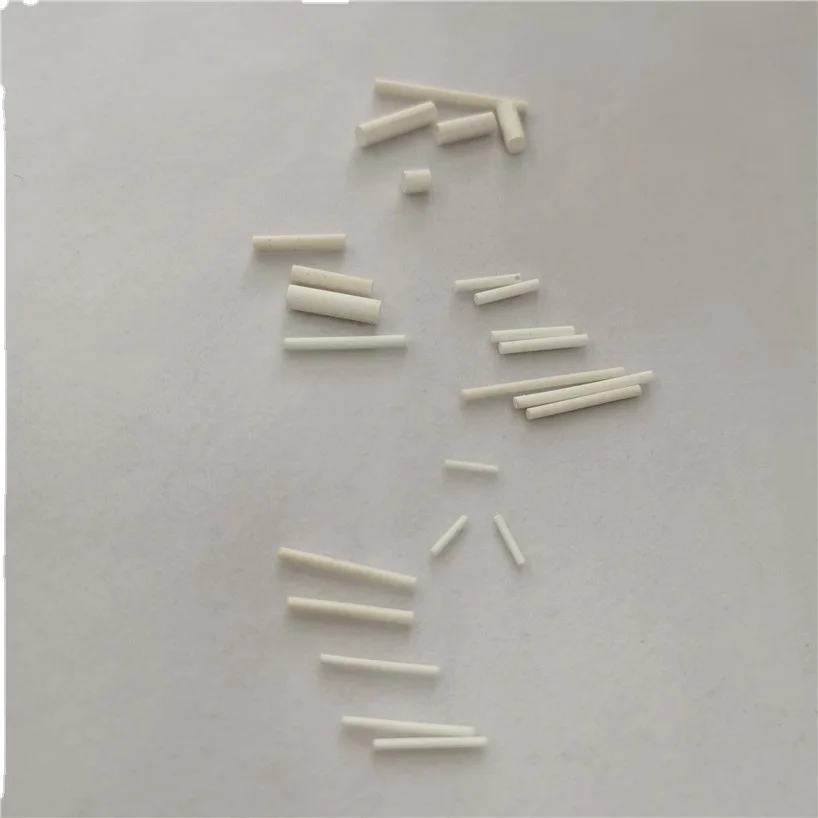
When we think of ceramics, our minds often wander to beautiful pottery, delicate porcelain teacups, or ancient clay artifacts. However, there is an entire class of advanced materials known as “technical ceramics” or “engineering ceramics” that have absolutely nothing to do with art. Among these, alumina ceramic (aluminum oxide, $\text{Al}_2\text{O}_3$) stands as the undisputed titan of the industrial world.
From the microchips inside your smartphone to the heavy-duty machinery lining automotive factories, alumina ceramic acts as the invisible backbone of modern technology. But what makes this white, stone-like material so profoundly valuable to engineers across the globe?
Let’s pull back the curtain on the science, benefits, and diverse applications of alumina ceramic.
The Science: What Makes Alumina So Tough?
Alumina ceramic is synthesized from high-purity aluminum oxide powder. Through a process called sintering, this powder is shaped under immense pressure and fired at scorching temperatures—often exceeding $1600^\circ\text{C}$ ($2912^\circ\text{F}$). This intense heat causes the microscopic particles to fuse together, forming a dense, tightly bound crystalline matrix.
The resulting material possesses a combination of physical properties that seem almost supernatural:
- Extreme Hardness: On the Mohs hardness scale, alumina ranks at a 9—trailing just behind diamonds. It is highly resistant to scratching, scraping, and mechanical wear.
- High Thermal Resistance: It can comfortably withstand continuous operating temperatures well above $1500^\circ\text{C}$, maintaining its structural integrity where metals would long have melted or warped.
- Electrical Insulation: Alumina has an incredibly high dielectric strength, meaning it does not conduct electricity, making it a flawless insulator.
- Chemical Inertness: It refuses to react with acids, alkalis, or aggressive chemical solvents, making it completely immune to rust and corrosion.
Key Industries Driving the Demand for Alumina
Because of its versatile properties, alumina ceramic is heavily utilized across a wide spectrum of demanding industries:
1. Electronics and Semiconductor Manufacturing
In the tech world, heat and electrical short circuits are constant threats. Alumina ceramic is used to manufacture substrates for electronic circuits, laser equipment components, and insulators. Its ability to dissipate heat while preventing electrical currents from jumping makes it vital for the safe operation of high-power electronics.
2. Heavy Machinery and Wear Protection
In mining, cement production, and power generation, tons of abrasive materials (like rocks, coal, and sand) scrape against pipes and chutes daily. Over time, this obliterates steel. Industries line these high-friction areas with alumina ceramic wear tiles or use alumina grinding media. Because of its hardness, alumina extends the lifespan of industrial machinery by years.
3. Medical and Aerospace Engineering
Alumina is bio-inert, meaning the human body does not reject it. This has made high-purity alumina a premier material for medical implants, such as hip replacement joints and dental crowns. In aerospace, its lightweight nature combined with extreme thermal resistance makes it perfect for heat shields and structural components in aircraft.
Comparing Alumina Purity Grades
Not all alumina is created equal. Manufacturers alter the purity level of the material depending on how punishing the final application will be.
| Alumina Purity | Key Characteristics | Typical Applications |
| 85% – 90% Alumina | Economical, easier to machine, balanced properties. | Electrical insulators, textile guides, sandblasting nozzles. |
| 95% – 96% Alumina | Excellent mechanical strength, highly wear-resistant. | Mechanical seals, crucible linings, electronics substrates. |
| 99% – 99.8% Alumina | Maximum corrosion resistance, handles ultra-high temperatures. | Semiconductor components, high-vacuum equipment, medical implants. |
Challenges and Future Outlook
While alumina ceramic sounds like the perfect material, it does have one major engineering Achilles’ heel: brittleness. Like all ceramics, while it is incredibly strong under compression, it lacks the tensile ductility of metal. If you strike an alumina component with a hammer, it will shatter rather than bend.
To overcome this, material scientists frequently alloy alumina with other materials—such as zirconia—to create Zirconia Toughened Alumina (ZTA). This hybrid material absorbs impacts much better, paving the way for even more rigorous industrial uses.
The Final Verdict
Alumina ceramic might not be something you see or touch in your everyday life, but our modern world simply couldn’t function smoothly without it. By bridging the gap between extreme heat, electrical volatility, chemical chaos, and mechanical friction, it allows other technologies to thrive.
As we push deeper into the frontiers of electric vehicles, aerospace exploration, and advanced microchips, this ancient material—reimagined through modern chemistry—will continue to quietly shape our future.