

News
The Clear Choice: Why Quartz Cuvettes are the Unsung Heroes of the Lab

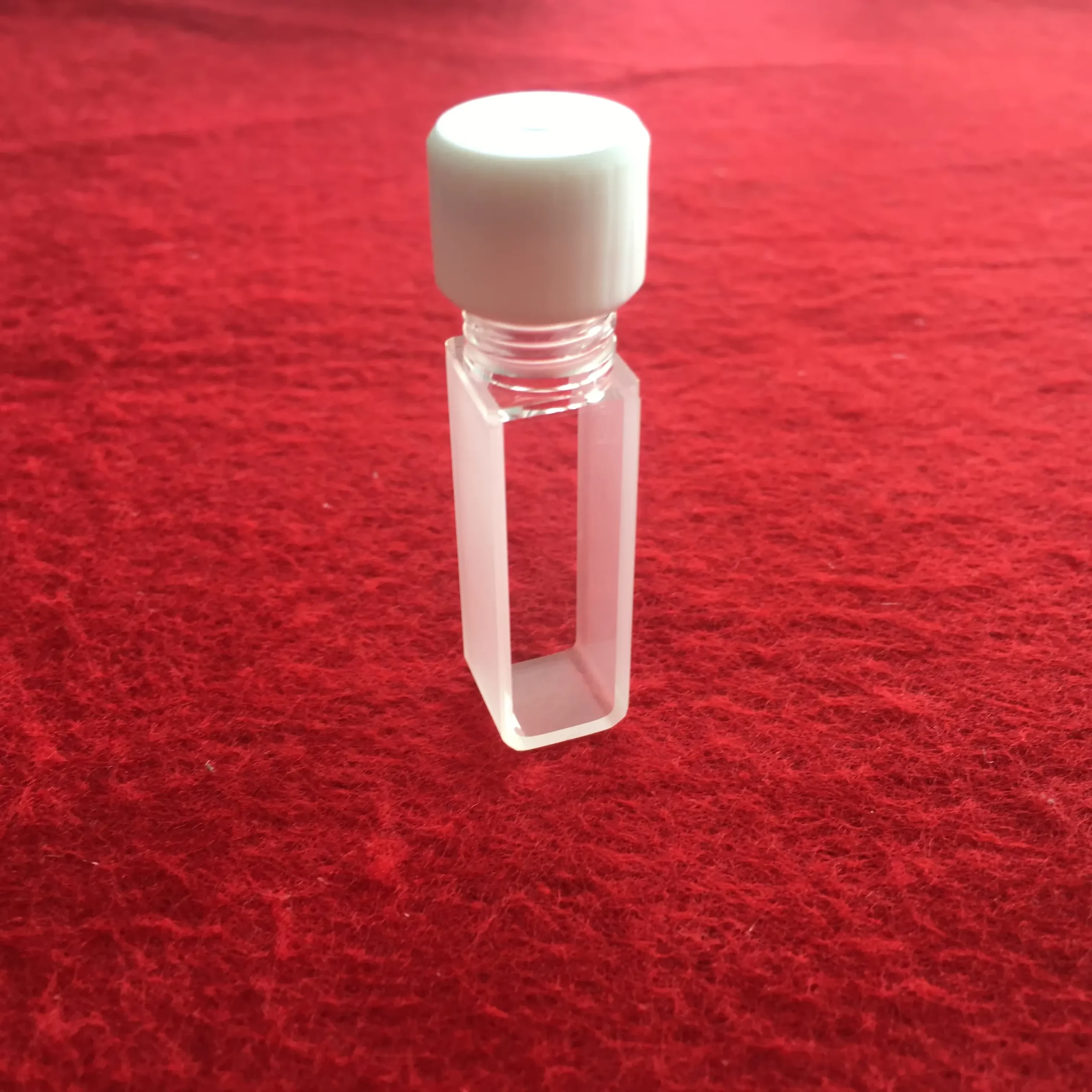
If you’ve ever worked in a spectroscopy lab, you know that accurate data relies on a chain of perfect conditions. You calibrate your instruments, precisely pipette your samples, and cross your fingers for a clean baseline. But there is one critical component that often gets taken for granted until something goes wrong: the cuvette.
While plastic and glass cuvettes certainly have their place, when it comes to high-precision research, quartz cuvettes are the undisputed gold standard. Let’s dive into why these tiny glass-like cells are worth every penny and how choosing the right one can make or break your analytical results.
What is a Quartz Cuvette?
At first glance, a quartz cuvette looks just like a standard glass or plastic sample holder—a small, square tube designed to hold liquid samples for spectroscopic analysis. However, the magic lies entirely in the material.
Unlike standard optical glass or polystyrene, quartz cuvettes are made from high-purity fused silica (quartz). This material grants them extraordinary optical clarity, thermal stability, and chemical resistance. They are specifically engineered to allow light to pass through a sample with minimal interference, acting as a perfectly neutral window for your spectrophotometer.
Quartz vs. Glass vs. Plastic: The Ultimate Showdown
To truly appreciate quartz, we have to look at the alternatives. Laboratories typically use three types of cuvettes: plastic (disposable), standard glass, and quartz.
Here is how they stack up across key performance metrics:
| Feature | Plastic Cuvettes | Glass Cuvettes | Quartz Cuvettes |
| Wavelength Range | Visible only (approx. 380–780 nm) | Visible to Near-IR (approx. 340–2500 nm) | UV to Near-IR (approx. 190–2500 nm) |
| Chemical Resistance | Poor (dissolves in organic solvents) | Good (sensitive to strong hydrofluoric acid) | Excellent (withstands almost all acids/solvents) |
| Durability | Single-use (scratches easily) | Reusable (moderate durability) | Highly Reusable (scratch-resistant but fragile) |
| Cost | Very Low | Moderate | High Investment |
The UV-Vis Game Changer
The absolute biggest differentiator is UV light transmission. Standard glass and plastic absorb ultraviolet light. If you try to measure DNA, RNA, or proteins (which typically absorb light at around 260 nm and 280 nm) using a plastic or glass cuvette, the material itself will block the light.
Key Takeaway: If your research operates in the ultraviolet spectrum (below 340 nm), quartz is not just an option—it is an absolute necessity.
Top Benefits of Investing in Quartz Cuvettes
While the upfront cost of a quartz cuvette is significantly higher than a box of disposables, the long-term ROI for a precise laboratory is unmatched.
1. Unmatched Optical Purity
Quartz cuvettes offer up to 80-90% light transmission across a massive spectral range. This minimal absorbance ensures that the data your spectrophotometer reads is actually from your sample, not your container.
2. Extreme Thermal and Chemical Resilience
Are you working with aggressive organic solvents like acetone, toluene, or chloroform? A plastic cuvette will melt or cloud instantly. Quartz remains completely unfazed. Furthermore, quartz has a remarkably low coefficient of thermal expansion, meaning it can withstand extreme temperature fluctuations without cracking or warping—essential for temperature-controlled kinetics studies.
3. Sustainability and Precision Consistency
Disposable plastic cuvettes contribute to lab waste and can vary slightly from batch to batch, introducing subtle errors. A single, well-maintained quartz cuvette can be used thousands of times, ensuring absolute consistency across your control and experimental groups year after year.
Pro-Tips for Caring for Your Quartz Cuvettes
Because quartz cuvettes are a premium investment, treating them with care is vital. A single fingerprint or scratch can ruin a reading or break the cell. Here is how the pros keep theirs pristine:
- Never Touch the Optical Windows: Always handle cuvettes by their frosted sides. Fingerprints leave oils that absorb UV light.
- Ditch the Paper Towels: Never wipe a cuvette with standard tissues or paper towels, which can cause micro-scratches. Use specialized lens paper or optical wipes.
- Clean Immediately After Use: Do not let samples dry inside the cuvette. Rinse immediately with an appropriate solvent, or soak in a specialized cuvette cleaning solution.
- Store Safely: When not in use, store your cuvettes in their original padded cases rather than letting them roll around in a lab drawer.
Final Thoughts: Is Quartz Right for Your Lab?
If your daily lab routine involves basic colorimetric assays in the visible light spectrum (like a standard Bradford protein assay), inexpensive disposable cuvettes will do the job perfectly fine.
However, if your work pushes into the ultraviolet range, demands high-temperature stability, relies on organic solvents, or requires the highest possible analytical accuracy, there is simply no substitute for a high-quality quartz cuvette. They are the silent, crystal-clear partners behind groundbreaking discoveries in biochemistry, pharmaceuticals, and environmental science.