

News
Unlocking the Invisible: Why the UV Quartz Cuvette is Essential for Precision Spectroscopy

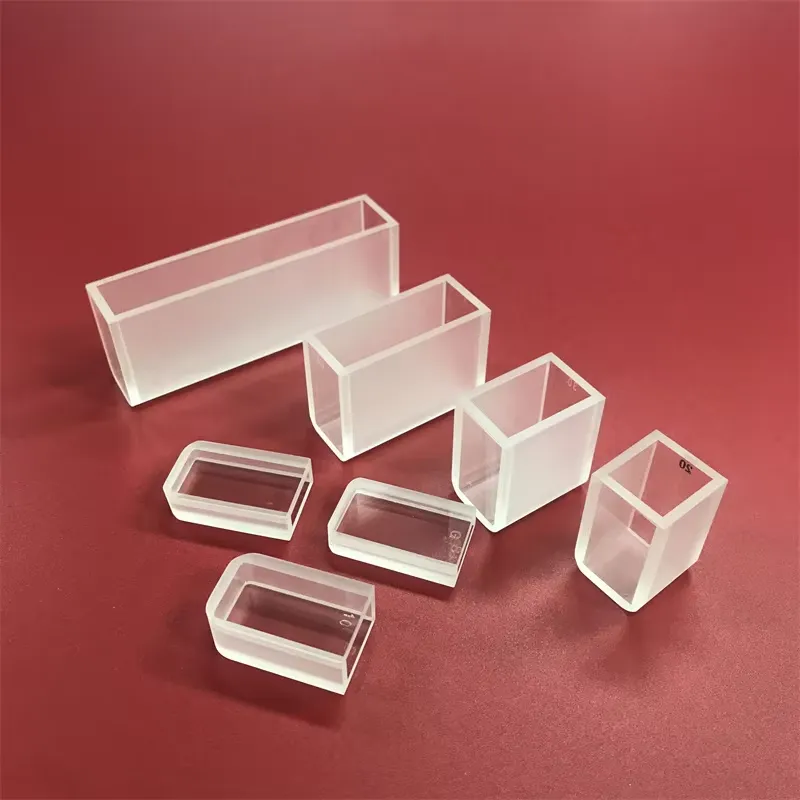
In the world of molecular biology, pharmaceutical development, and chemical analysis, precision isn’t just a goal—it’s a requirement. Scientists routinely measure substances that are completely invisible to the naked eye, relying on spectrophotometers to capture the exact absorbance of a sample.
But here is a fundamental truth of spectroscopy: your data is only as good as the container holding your sample.
While glass and plastic work fine for standard everyday applications, when your research ventures into the ultraviolet (UV) spectrum, there is only one gold standard: the UV quartz cuvette. Let’s explore why this tiny piece of laboratory glassware is an absolute powerhouse for precision science.
The Core Challenge: The UV Blind Spot
To understand the value of a UV quartz cuvette, we first have to understand the limitations of standard laboratory materials.
Most everyday transparent materials—like the glass in your windows or the polystyrene in disposable laboratory cups—look perfectly clear to human eyes. However, light exists on a massive spectrum. While visible light ranges from about 400 nm to 700 nm, the ultraviolet spectrum dips much lower, down to 190 nm.
To standard optical glass and plastic, UV light is essentially opaque. These materials absorb ultraviolet light heavily. If you attempt to pass a UV beam through a plastic cuvette, the light will be blocked by the container itself, completely masking the reading of your actual sample.
This is where fused silica, or high-purity quartz, comes in.
Why Choose a UV Quartz Cuvette?
A UV quartz cuvette is specifically engineered to overcome the limitations of glass and plastic. Here is what sets it apart:
1. Unmatched UV Transmittance
Unlike regular glass, UV-grade quartz features an incredibly pure chemical structure that allows ultraviolet light to pass through with virtually zero interference. A premium UV quartz cuvette provides excellent transmission all the way down to 190 nm. This makes it an absolute necessity for quantifying critical biomolecules, such as:
- Nucleic Acids (DNA/RNA): Which naturally absorb light at 260 nm.
- Proteins: Which typically absorb light at 280 nm.
- Organic Compounds: Many of which have distinct UV fingerprints below 300 nm.
2. Ultimate Chemical Compatibility
Research often requires aggressive reagents. If you put organic solvents like acetone, DMSO, chloroform, or toluene into a standard plastic cuvette, the plastic will instantly cloud, warp, or entirely dissolve. UV quartz cuvettes are chemically inert, meaning they can withstand almost any acid, base, or organic solvent without degrading or altering your optical path.
3. Thermal Stability for Kinetic Studies
Many biochemical reactions are temperature-dependent, requiring samples to be heated or cooled during analysis. Quartz has an incredibly low coefficient of thermal expansion. This means it can handle extreme temperature fluctuations without cracking or changing its physical dimensions, ensuring your pathlength remains exactly $10\text{ mm}$ (or your specific standard) throughout the entire experiment.
The True Cost: Investment vs. Disposables
There is no avoiding the elephant in the room: UV quartz cuvettes are expensive. A single high-quality quartz cell can cost as much as a bulk box of hundreds of disposable plastic cuvettes.
However, looking at this strictly as a cost barrier is a mistake. It is an investment in data integrity.
[Disposable Plastic] ❌ Absorbs UV Light + Warps with Solvents = Unreliable Data
[UV Quartz Cuvette]  Correct Transmittance + Reusable + Durable = Flawless Baseline
Disposable cuvettes vary slightly from batch to batch, introducing subtle errors into your baselines. A single, meticulously cleaned UV quartz cuvette offers absolute consistency. When cared for properly, a quartz cuvette can last for years, providing a sustainable, zero-waste alternative to mountains of single-use plastics.
Master Rules for Handling and Maintenance
Because UV quartz cuvettes are precision optical instruments, they require a delicate touch. A single scratch or a fingerprint can ruin your baseline. Follow these industry best practices to protect your investment:
- Never Touch the Optical Windows: Always hold the cuvette by the frosted sides. The natural oils on your fingertips absorb UV light and will skew your 260/280 ratios.
- Avoid Regular Tissues: Never wipe a cuvette with standard lab tissues, which can leave micro-scratches on the quartz surface. Use specialized optical lens paper.
- Clean Instantly: Never let a sample dry inside the cuvette. Rinse it immediately after use with an appropriate solvent or a dedicated cuvette cleaning solution.
- Store with Care: Do not leave cuvettes loose in a drawer. Keep them in their velvet-lined or padded storage boxes when not in use.
Final Verdict
If your laboratory work is strictly confined to the visible spectrum—like basic colorimetric assays—plastic or glass will serve you well.
But the moment your research requires you to peer into the invisible ultraviolet world, the UV quartz cuvette becomes your most vital tool. By eliminating background interference, withstanding harsh chemicals, and delivering flawless optical clarity, it ensures that your discoveries are built on a foundation of absolute truth.