

News
Counting the Cost of Precision: A Deep Dive into Quartz Cuvette Price Factors

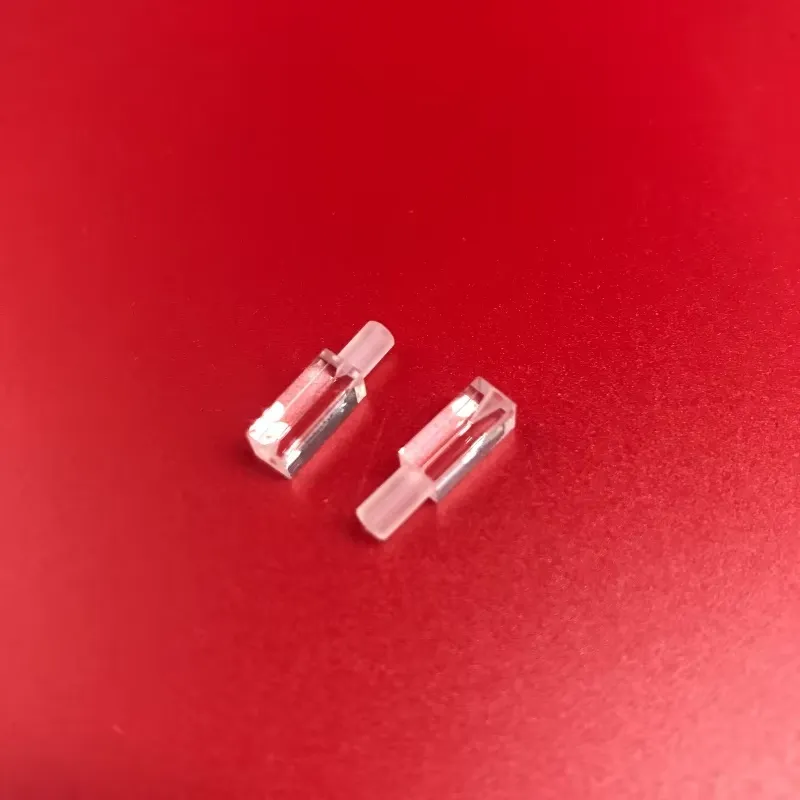
When outfitting a spectroscopy lab, budgeting is always a balancing act. You want the highest possible data integrity, but you also have to keep an eye on operational costs. If your research involves ultraviolet (UV) light, fluorescent metrics, or aggressive organic solvents, you already know that disposable plastic and standard glass won’t cut it—you need quartz.
But as you browse laboratory supply catalogs, one question inevitably arises: Why is there such a massive variance in quartz cuvette prices?
Depending on the specifications, a single quartz cell can cost anywhere from $20 to over $300. Understanding what drives this price gap is the key to making a smart, cost-effective purchasing decision for your lab. Let’s break down the hidden factors behind quartz cuvette pricing.
The Baseline: Why is Quartz More Expensive Than Glass?
Before looking at specific price variations, it is important to address the elephant in the room: upfront cost. A standard glass cuvette might cost a few dollars, and plastic cells are fractions of a cent. In contrast, quartz sits at a premium.
The primary driver of the baseline quartz cuvette price is material purity and manufacturing complexity.
- The Raw Material: True UV-grade quartz is made from high-purity fused silica ($SiO_2$). Refining this raw material to be completely free of microscopic air bubbles and metallic impurities is an intensive, high-energy chemical process.
- The Optical Properties: This purity is exactly what allows light to pass through smoothly all the way down to 190 nm, preventing the container itself from absorbing the ultraviolet rays and ruining your baseline.
4 Main Factors That Determine Quartz Cuvette Price
When you look at quotes from different optical manufacturers, the final price tag is determined by four primary structural and design variables.
1. Optical Window Configuration (2-Way vs. 4-Way)
The number of polished, optically clear windows on a cuvette directly dictates its manufacturing time—and its cost.
- 2-Window Cuvettes ($30 – $70 each): Designed for standard spectrophotometers where light passes straight through in a single line. The other two walls are frosted for handling.
- 4-Window Cuvettes ($80 – $200+ each): Engineered for fluorometers (fluorescence spectroscopy). Because fluorescence emitting from a sample scatters in all directions, the detector sits at a 90-degree angle from the light source, requiring all four sides of the cuvette to be perfectly polished and clear.
2. Manufacturing Technology (Glue vs. Thermal/Optical Fusion)
How the four walls of the cuvette are held together changes both the price point and the chemical durability:
- Glue Bonded ($20 – $50): The walls are held together using specialized optical adhesives. These are economical but vulnerable to aggressive organic solvents (like chloroform or acetone) which can dissolve the glue over time.
- Fully Fused / Thermal Contact Bonding ($90 – $300+): The quartz pieces are literally melted together at extreme temperatures or fused via molecular contact without any adhesive. They are 100% seamless, incredibly durable, and completely impervious to chemical corrosion.
3. Chamber Volume and Design (Macro vs. Micro)
Standard 3.5 mL macro cuvettes are the most affordable because they are mass-produced and easy to align. However, if your sample volume is scarce (e.g., rare proteins or DNA samples), you require a micro or ultra-micro cuvette.
- Micro cuvettes use thick black quartz walls to narrow the internal chamber down to volumes like 350 µL or even 10 µL.
- The precision machining required to mask the walls and perfectly align a tiny 1 mm pathlength dramatically increases the labor cost, often doubling the price of a standard macro cell.
4. Specialized Add-ons (Flow Cells, Stoppers, and Screw Caps)
Standard open-top cuvettes with simple PTFE lids represent the baseline price. If your experiments require an airtight seal to prevent evaporation or sample degradation, adding a graded glass-to-quartz ground joint stopper or a septum screw cap will bump the price up by $40 to $100 per unit. Continuous-monitoring flow-through cells with attached microfluidic tubing connectors represent the top tier of the pricing spectrum.
Evaluating the Long-Term ROI
While the initial investment in quartz might trigger some budget anxiety, looking at it purely as a one-time expense hides the true Return on Investment (ROI).
| Cuvette Type | Initial Unit Price | Lifespan / Reusability | Long-Term Cost Per Run |
| Disposable Plastic | ~$0.10 – $0.50 | Single-use only | Accumulates rapidly over thousands of assays. High waste. |
| Premium Quartz | ~$50.00 – $150.00 | Years (with proper maintenance) | Fractional pennies over time. Zero batch-to-batch variance error. |
A high-quality quartz cuvette behaves as a permanent piece of lab hardware. If you establish strict cleaning protocols—using specialized lens paper and immediate solvent rinsing—a single pair of fused quartz cells can easily outlast thousands of disposable plastic units, saving money while ensuring flawless baseline stability.
Final Purchasing Verdict: Balancing Budget and Specification
When assessing quartz cuvette prices, match the tool to the exact requirements of your application:
- For standard UV-Vis absorption of robust, water-based samples, an economical 2-window, glue-bonded cell ($40-$60) works brilliantly.
- For fluorescence tracking or studies involving harsh organic solvents, do not cut corners—invest in a 4-window, fully fused thermal quartz cell ($100+) to protect your data from chemical interference and baseline drifting.