

News
Boron Nitride Ceramics: The White Graphite Revolutionizing High-Temperature Engineering

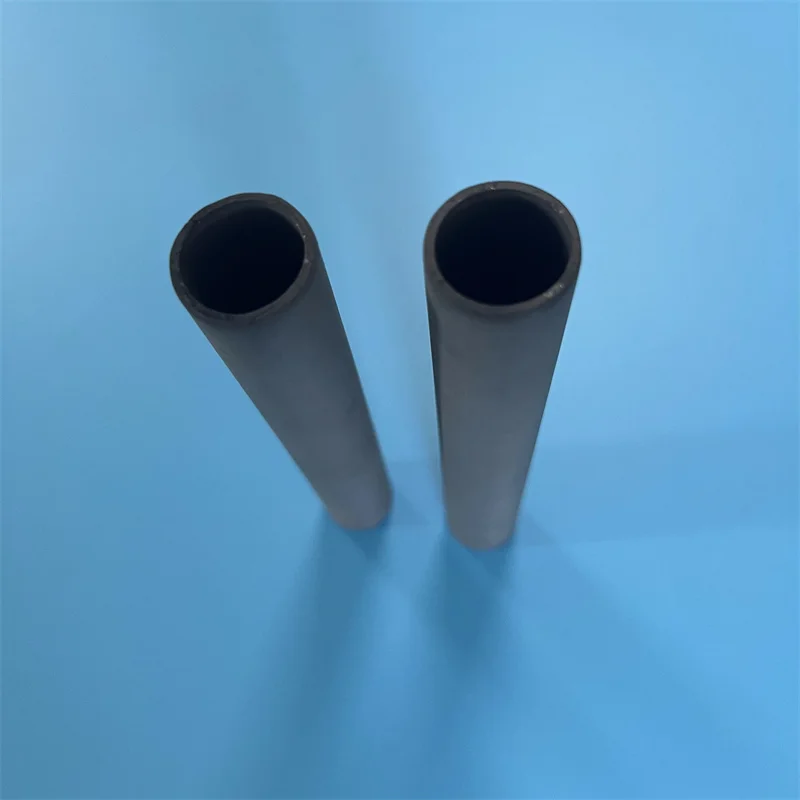
In the advanced frontier of material science, finding a material that combines excellent electrical insulation with high thermal conductivity is the ultimate engineering paradox. Most materials that conduct heat well—like copper, aluminum, or steel—are also highly conductive to electricity. Conversely, excellent electrical insulators like plastics or traditional ceramics usually act as thermal barriers, trapping heat instead of dispersing it.
There is, however, one extraordinary advanced material that completely shatters this rule: Boron Nitride Ceramics (Chemical formula: $\text{BN}$).
Often referred to as “White Graphite” due to its slick texture and similar lubricating properties, hexagonal boron nitride (h-BN) has emerged as an indispensable problem-solver for the aerospace, semiconductor, automotive, and metallurgy industries.
Here is an in-depth exploration of the unique science behind boron nitride ceramics, their elite physical characteristics, and how they are transforming modern heavy industry.
The Crystalline Masterpiece: What is “White Graphite”?
Boron nitride is a synthetic, man-made compound composed of equal parts boron and nitrogen. It does not exist naturally in the earth and must be synthesized at ultra-high temperatures using precise chemical reactions.
In its most common and commercially vital form—Hexagonal Boron Nitride (h-BN)—the atoms arrange themselves into a layered, hexagonal lattice structure that looks identical to graphite under an electron microscope. Because the layers slide over each other with minimal resistance, raw boron nitride yields a smooth, greasy feel and acts as an outstanding solid lubricant.
However, unlike black graphite, which absorbs light and conducts electricity, boron nitride is stark white and acts as a powerful electrical barrier. This structural and visual duality is what earned it its famous industrial nickname.
4 Standout Properties of Boron Nitride Ceramics
Why do industrial designers select boron nitride over other advanced ceramics like alumina or zirconia? The answer lies in its unique portfolio of physical properties:
1. The Ultimate Thermal-Electrical Paradox
Boron nitride is a rare material that possesses high thermal conductivity coupled with high dielectric strength. It draws heat away from sensitive electronic components at a rate comparable to metal, yet it functions as a flawless electrical insulator, blocking stray currents and electrical arcing even at high voltages.
2. Exceptional Thermal Shock Resistance
Most technical ceramics crack or shatter when subjected to sudden, violent temperature shifts because different zones of the material expand at unequal rates. Boron nitride features a remarkably low coefficient of thermal expansion. It can be heated to $1500^\circ\text{C}$ ($2732^\circ\text{F}$) and immediately plunged into cold water without experiencing structural micro-cracks or warping.
3. Non-Wetting and Chemically Inert
Boron nitride is completely non-reactive and chemical-resistant. Most remarkably, it exhibits a “non-wetting” characteristic when exposed to molten metals and glass. Molten aluminum, zinc, copper, magnesium, and liquid glass cannot stick to, react with, or corrode a boron nitride surface.
4. Precision Machinability
Standard advanced ceramics like zirconia or silicon carbide are incredibly hard and require specialized diamond-grinding tools to shape after firing. Boron nitride, when hot-pressed into solid blocks, can be easily machined using standard high-speed steel workshop tools. It can be drilled, turned, milled, and threaded into intricate geometries with extreme dimensional accuracy.
High-Stakes Applications: Where Boron Nitride is Essential
Thanks to its robust physical profile, boron nitride ceramics have migrated from niche laboratories into the heart of cutting-edge technological infrastructure:
- Semiconductor and Microelectronics: As computer chips and power electronics become smaller and more powerful, managing heat is critical. Boron nitride is fabricated into heat sinks, insulating substrates, and wafer-processing fixtures to draw destructive heat away from processors while maintaining electrical isolation.
- Molten Metal and Glass Metallurgy: Because liquid metals cannot wet or degrade it, boron nitride is machined into crucibles, nozzles, break rings for continuous casting, and horizontal casting dies. It is also widely used as a high-temperature release agent paint to coat industrial molds.
- Vacuum Furnaces and High-Heat Insulation: In high-temperature industrial furnaces, boron nitride components serve as structural supports, spacers, and electrical fixtures. It remains structurally stable in a vacuum or inert atmosphere at temperatures exceeding $2000^\circ\text{C}$ ($3632^\circ\text{F}$).
- Aerospace and Hall Effect Thrusters: In deep-space exploration, ion propulsion engines (Hall effect thrusters) rely on boron nitride channels to confine plasma fuel. The material withstands continuous ionic bombardment and soaring thermal radiation while keeping the spacecraft’s electrical systems insulated.
Technical Comparison: Advanced Ceramics at a Glance
| Material Property | Alumina (Al2O3) | Zirconia (ZrO2) | Boron Nitride (BN) |
| Machinability | Extremely Difficult | Extremely Difficult | Easy (Standard Tools) |
| Thermal Shock Resistance | Moderate | Low | Maximum |
| Thermal Conductivity | Moderate | Very Low | High |
| Molten Metal Resistance | Fair | Good | Excellent (Non-Wetting) |
Final Thoughts: Shaping the Future of Innovation
As heavy industry and automated electronics push past historical boundaries, traditional metals and plastics are rapidly hitting their physical limits.
While the raw material and synthesizing cost of boron nitride ceramics represents a premium investment compared to standard refractories, its multi-functional nature makes it incredibly cost-effective. By eliminating the need for separate thermal conductors and electrical insulators, “White Graphite” reduces machinery complexity, minimizes maintenance downtime, and allows systems to run hotter, faster, and safer. When a project demands precision, heat management, and absolute structural safety, boron nitride remains the ultimate engineering shield.