

News
Silicon Carbide Ceramics: The Indestructible Powerhouse of Advanced Engineering

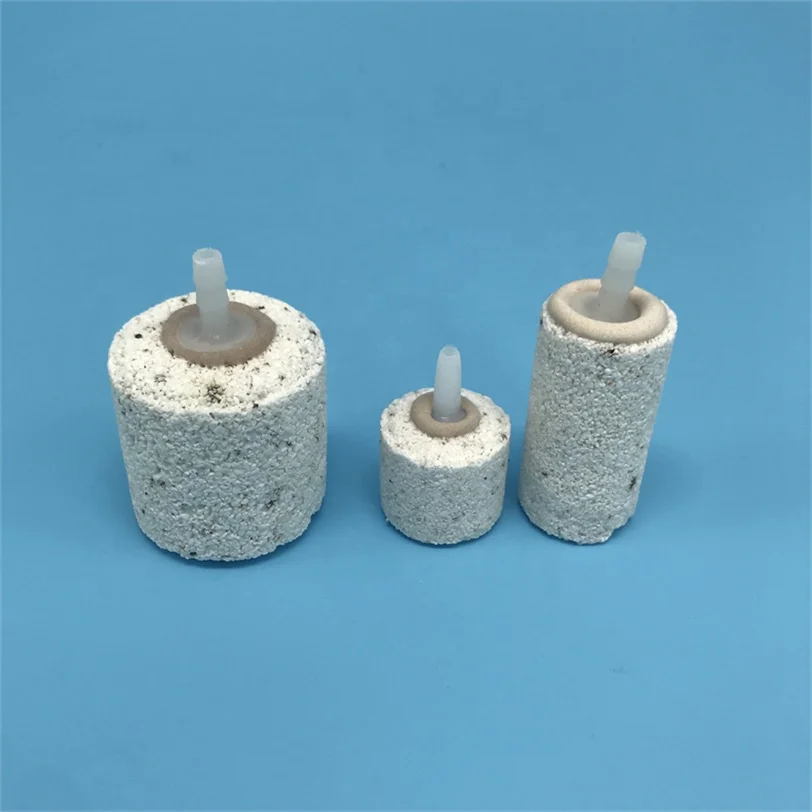
In the world of extreme engineering, materials face a brutal combination of challenges: searing temperatures that melt standard metals, aggressive chemicals that corrode alloys, and relentless abrasive forces that wear down ordinary components. When a mechanical environment demands absolute structural integrity under the harshest conditions imaginable, industrial designers turn to a true heavy-duty champion: Silicon Carbide Ceramics (Chemical formula: $\text{SiC}$).
Often referred to simply as carborundum, silicon carbide is a synthetic compound that bridges the gap between raw physical diamond-like hardness and advanced thermal resilience. From semiconductor manufacturing and aerospace propulsion to heavy-duty industrial pumps, this elite technical ceramic has become an indispensable asset for 21st-century innovation.
Here is an in-depth look at the science behind silicon carbide ceramics, their standout physical properties, and how they are shaping the future of high-stakes engineering.
The Core Chemistry: Forged in Extreme Heat
Silicon carbide does not exist in significant quantities naturally on Earth; it is primarily found in rare meteorites. Therefore, all commercial $\text{SiC}$ is synthesized using advanced manufacturing methods, such as the Acheson process, where high-purity silica sand and carbon are reacted in an electric resistance furnace at temperatures exceeding $2500°C$.
Depending on the intended application, manufacturers shape the material using various technical processes:
- Sintered Silicon Carbide (SSiC): Produced by fusing pure $\text{SiC}$ powder with sintering aids under extreme heat, resulting in a dense, highly pure material with exceptional chemical and wear resistance.
- Reaction Bonded Silicon Carbide (RBSiC / SiSiC): Formed by infiltrating a porous carbon compact with molten silicon. This process allows for the creation of complex, large-scale components with excellent dimensional precision.
At the atomic level, silicon and carbon atoms are locked together in a highly stable, tightly packed covalent bonding network. This rigid crystalline grid is the secret behind the material’s legendary structural strength and hardness.
4 Elite Properties of Silicon Carbide
Why do high-tech industries choose silicon carbide over alternative technical ceramics like alumina or zirconia? The answer lies in its exceptional, multi-functional performance profile:
1. Diamond-Like Hardness and Wear Resistance
Silicon carbide is incredibly hard, ranking just below diamond and boron carbide on the Mohs scale (achieving a hardness value of over 2500 HV). This extreme surface hardness gives $\text{SiC}$ unmatched resistance to abrasive wear, sliding friction, and mechanical scraping. Components subjected to continuous grit or slurry movement experience virtually zero material loss over years of heavy operation.
2. High Thermal Conductivity with Low Expansion
Unlike most traditional ceramics that trap heat and act as thermal insulators, silicon carbide conducts heat rapidly—performing on par with or better than many industrial metals. When paired with its exceptionally low coefficient of thermal expansion, $\text{SiC}$ achieves legendary thermal shock resistance. It can endure violent, rapid temperature fluctuations without micro-cracking, warping, or shattering.
3. Absolute Strength at Scorching Temperatures
While standard industrial metals and alloys soften, creep, or warp when exposed to extreme heat, silicon carbide maintains its immense mechanical tensile and flexural strength at operating temperatures well exceeding $1400°C$.
4. Total Chemical and Corrosion Immunity
Silicon carbide is chemically inert across nearly the entire pH scale. It is completely immune to corrosion, oxidation, and acid degradation when exposed to aggressive chemical processing environments, strong acids, alkalis, or volatile molten non-ferrous metals.
Critical Real-World Applications
Thanks to its robust physical profile, silicon carbide ceramics have migrated out of specialized laboratories and into the core of high-stakes product design:
- Mechanical Seals, Bearings, and Pump Parts: In the oil, gas, and chemical processing industries, pumps must continuously handle abrasive slurries and highly corrosive fluids. Silicon carbide seal rings and bearings provide a perfectly smooth, rust-proof, and wear-resistant interface that dramatically extends machinery lifespans.
- Semiconductor Manufacturing Equipment: The chip-making industry demands absolute material purity and high-temperature stability. Silicon carbide is fabricated into wafer carrier trays, susceptors, focus rings, and furnace tubes used during critical etching and chemical vapor deposition (CVD) processes.
- Ballistic Armor Plates: Because of its extreme hardness and lightweight nature compared to steel, silicon carbide is heavily utilized in high-performance military body armor and vehicle armor plates to shatter incoming high-velocity projectiles.
- Kiln Furniture and Refractory Elements: Thanks to its high thermal conductivity and hot strength, $\text{SiC}$ is crafted into structural beams, rollers, and plates inside industrial kilns and high-temperature furnaces, optimizing energy efficiency and structural load support.
Technical Ceramics Comparison at a Glance
| Material Type | Primary Strength | Main Limitation | Ideal Application |
| Alumina ($\text{Al}_2\text{O}_3$) | Cost-effective, high electrical insulation | Moderate brittleness | High-voltage insulators, lab tubes |
| Zirconia ($\text{ZrO}_2$) | Maximum fracture toughness at room temp | Loses strength at ultra-high temperatures | Medical implants, structural wear parts |
| Silicon Carbide ($\text{SiC}$) | Maximum hardness, high thermal conductivity, extreme hot strength | High manufacturing and diamond-grinding cost | Mechanical seals, semiconductor tools, heavy wear liners |
The Final Verdict
As modern manufacturing pushes deeper into the frontiers of automated chemical lines, electric vehicles, and high-temperature aerospace exploration, traditional materials are rapidly reaching their physical thresholds.
While the upfront procurement and diamond-machining costs of Silicon Carbide Ceramics represent a premium investment, its ability to virtually eliminate machinery downtime, resist aggressive chemical attacks, and survive extreme thermal spikes makes it an incredibly cost-effective asset over its operational lifetime. When a project demands absolute reliability under pressure, silicon carbide remains the ultimate engineering shield.