

News
Mastering the Extremes: The Indispensable Role of the Quartz Glass Plate in Modern Industry

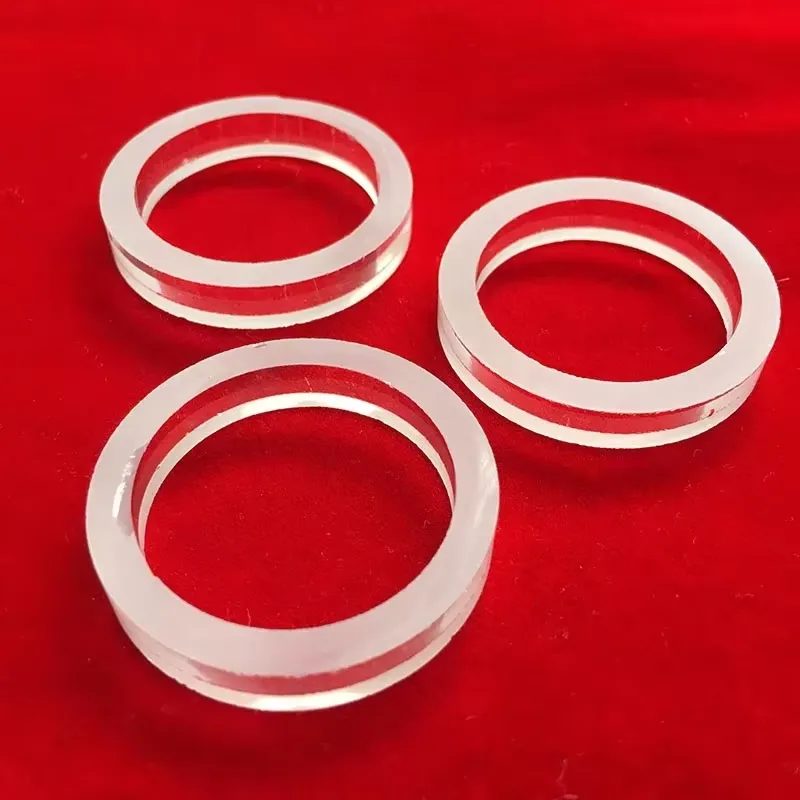
In the world of advanced manufacturing, materials are constantly pushed to their absolute limits. Aerospace components must withstand cosmic radiation, semiconductor chips require atomic-level cleanliness, and deep-UV lasers demand flawless optical pathways. When ordinary borosilicate or soda-lime glass hits its breaking point under these intense pressures, engineers turn to a reliable alternative: the quartz glass plate.
Often referred to as a fused silica or fused quartz sheet, a quartz glass plate looks like a standard sheet of polished glass to the untrained eye. However, underneath that crystal-clear surface lies an extraordinary set of thermal, optical, and chemical properties. Let’s look at the science behind this exceptional material and explore why it remains irreplaceable in the world’s most demanding high-tech industries.
What Makes Quartz Glass Different?
To understand the superior performance of a quartz glass plate, we have to look at its atomic structure. Traditional glass is a cocktail of ingredients—typically silicon dioxide mixed with soda ash, lime, and various metal oxides. These additives lower the melting point, making the glass easier and cheaper to mold, but they also introduce structural weaknesses.
A premium transparent quartz glass plate, by contrast, consists of a single component: amorphous silicon dioxide ($SiO_2$) with a purity level often exceeding 99.99%. Because it contains virtually zero metallic impurities, the molecular bonds are incredibly strong and stable, giving the material a uniquely robust set of physical traits.
The Core Advantages of Quartz Glass Plates
When outfitting an industrial system or a precise scientific laboratory, utilizing quartz plates yields several major performance benefits:
1. Exceptional Thermal Shock Resistance
If you take a standard glass pane heated to $500^\circ\text{C}$ and plunge it into cold water, it will instantly shatter due to uneven contraction. A quartz glass plate features an incredibly low coefficient of thermal expansion ($\approx 5.5 \times 10^{-7}/^\circ\text{C}$), which is roughly $1/12\text{th}$ to $1/20\text{th}$ that of ordinary glass.
The Red-Hot Test: A quartz plate can be heated to a glowing $1,100^\circ\text{C}$ and dropped directly into ice water without a single crack forming. This unparalleled thermal stability makes it the go-to material for high-temperature furnace sight glasses and aerospace heat shields.
2. Broad-Spectrum Optical Clarity
Standard glass filters out most ultraviolet (UV) rays and absorbs a portion of infrared (IR) light. High-purity quartz plates boast unique optical uniformity, offering up to 93% light transmission across a massive spectral band—stretching from far-ultraviolet ($160\text{ nm}$) all the way through visible light into the far-infrared range ($5\text{ }\mu\text{m}$).
3. Absolute Chemical Inertness
Quartz glass is highly acidic and entirely chemically inert against almost all reagents. Except for hydrofluoric acid ($HF$) and hot phosphoric acid, a quartz glass plate will not react with or dissolve in acids, bases, or organic solvents, even at elevated temperatures. This ensures zero contamination during highly sensitive chemical reactions.
Fused Quartz vs. Synthetic Fused Silica: Knowing the Difference
When sourcing quartz glass plates, B2B buyers and procurement officers must choose between two distinct manufacturing grades. Selecting the right one is crucial for balancing your project’s performance requirements and budget:
| Feature | Fused Quartz Plates (Natural) | Fused Silica Plates (Synthetic) |
| Raw Material Source | Mined natural quartz crystals/silica sand | Synthesized via chemical vapor deposition (CVD) |
| Purity Level | High (>99.9%) | Ultra-High (>99.999%) |
| UV Transmission | Moderate (Good down to ~260 nm) | Exceptional (Excellent down to 180 nm) |
| Common Uses | Furnace windows, lighting, chemical trays | Semiconductor wafers, laser optics, photomasks |
| Cost Profile | Economical / Mid-range | Premium Investment |
Pivotal Applications Across High-Tech Industries
Because of this unique overlap of properties, quartz glass plates are the unsung heroes powering several modern technological revolutions:
- Semiconductor Manufacturing: Inside cleanrooms, silicon wafers undergo intense plasma etching and chemical vapor deposition (CVD). Quartz plates are used as chambers, liners, and pedestals because they can handle the high process temperatures ($1,000^\circ\text{C}+$) without off-gassing impurities that would ruin the microchips.
- UV Sterilization and Disinfection: Germicidal UV-C light ($254\text{ nm}$) easily destroys bacteria and viruses, but it degrades standard plastics and glass. Quartz glass sheets are used as protective optical windows in industrial water treatment and medical sanitization equipment because they allow maximum UV-C transmission without clouding over time.
- High-Power Laser Optics: Because quartz plates have incredibly low fluorescence and low optical distortion, they are precision-ground and polished to serve as beam splitters, mirror substrates, and lenses inside heavy-duty industrial cutting lasers.
Final Purchasing Verdict
Investing in a quartz glass plate means buying peace of mind for your high-stress applications. Whether you need a simple, flame-fused sight glass to safely monitor an industrial kiln or an ultra-flat, synthetic fused silica substrate for precision lithography, matching the exact grade and thickness to your thermal and optical requirements will ensure flawless system reliability.