

News
Selecting the Ideal Custom Quartz Plate Supplier: A Guide for B2B Procurement

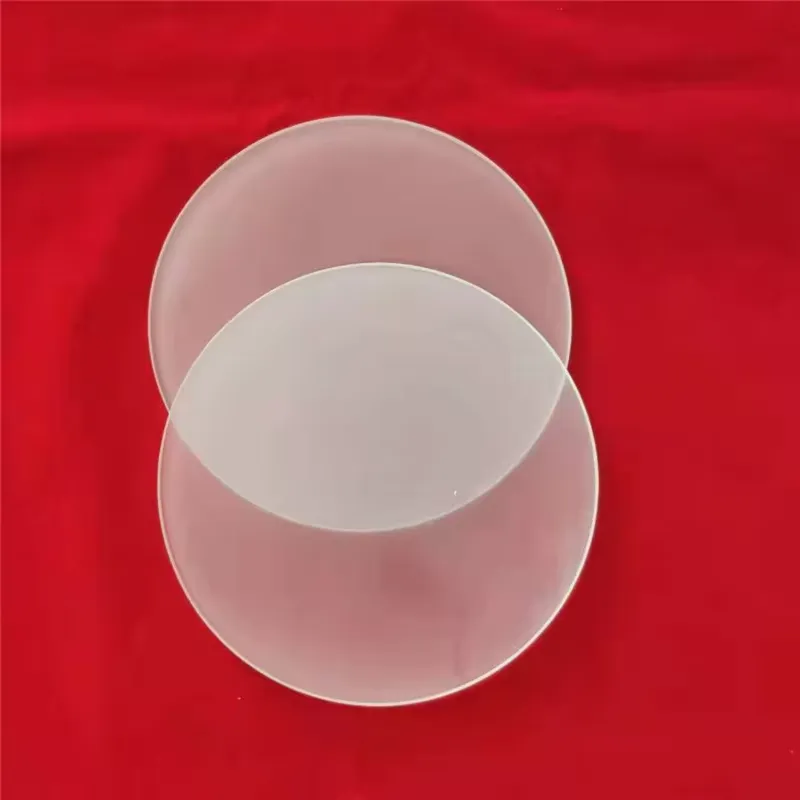
In high-tech industries like semiconductor fabrication, aerospace engineering, laser optics, and chemical manufacturing, off-the-shelf components rarely suffice. When your system designs demand materials capable of handling extreme temperatures ($1,100^\circ\text{C}+$+), corrosive acids, and strict optical purity down to the deep ultraviolet (UV) spectrum, a standard glass sheet simply will not cut it. You need custom-engineered quartz glass.
However, finding the material is only half the battle. The success of your project ultimately hinges on partnering with the right custom quartz plate supplier.
Because a minor microscopic defect or a millimeter’s deviation in tolerance can lead to catastrophic system downtime or ruined batches in a cleanroom, vetting your supplier’s technical capabilities is paramount. Let’s look at the critical factors you must evaluate when selecting a manufacturing partner for your custom quartz plates.
Why “Custom” Matters in Quartz Component Manufacturing
Quartz glass (fused silica or fused quartz) is notoriously difficult to machine. It is incredibly hard, brittle, and possesses a high melting point that defies standard glass-blowing techniques. A true custom quartz plate supplier does not just cut square sheets; they provide a comprehensive suite of precision fabrication services to match your exact CAD blueprints:
- Dimensional Profiling: CNC cutting, waterjet machining, and laser drilling to create intricate geometries, counterbored holes, internal slots, and bevels.
- Surface Finishing: Providing options ranging from raw fire-polished surfaces to ultra-flat, double-sided optical polishing ($\lambda/4$ or better scratch-dig specifications) for laser and microscopy applications.
- Edge Treatments: Precision ground, chamfered, or fire-polished edges to prevent chipping and micro-fracturing under mechanical stress.
4 Pillars of a Reliable Custom Quartz Plate Supplier
When requesting quotes and evaluating potential vendors, use these four pillars to separate high-quality manufacturers from low-tier brokers.
1. Raw Material Grading Capabilities
A reputable supplier should offer various material grades and guide you toward the most cost-effective solution for your application. They should clearly distinguish between:
- Natural Fused Quartz: Sourced from natural quartz crystals, ideal for high-temperature furnace windows and chemical trays due to its economic price point.
- Synthetic Fused Silica: Created via chemical vapor deposition ($SiO_2$). It features ultra-high purity ($>99.999\%$) and flawless transmission in the far-UV range, making it essential for semiconductor photolithography and deep-UV lasers.
2. Advanced Machining Tolerances
Ask your supplier about their machining tolerances. If you are ordering quartz plates to serve as backing plates or liners inside a plasma etching chamber, you may require tolerances as tight as $\pm0.05\text{ mm}$ or even tighter. A supplier utilizing state-of-the-art 5-axis CNC grinding machines and laser micrometer inspection systems will be able to provide the necessary quality assurance (QA) documentation.
3. Rigorous Quality Control and Cleanroom Packaging
Contamination is the silent killer in semiconductor and laboratory environments. If a quartz plate arrives with surface oils, metallic dust, or particulate contamination, it can ruin an entire production cycle. Ensure your custom quartz plate supplier cleans their finished products using ultrasonic acid baths and packs them securely inside a Class 100 (ISO 5) cleanroom using double-vacuum bagging.
4. Supply Chain Reliability and Volume Scaling
Whether you need a single prototype plate for an R&D lab or a steady stream of 5,000 units per month for an OEM product line, your supplier must scale with you. A robust supplier maintains deep inventories of raw quartz ingots and blanks, ensuring that global logistics fluctuations won’t cause unexpected lead-time delays for your manufacturing floor.
Evaluating the Total Cost of Ownership (TCO)
While procurement teams are naturally focused on the per-unit price, the cheapest quote often carries hidden risks.
[Low-Cost Supplier]  ➡️ Poor Tolerances + No Cleanroom Packing = Component Failure & Downtime
[Premium Supplier]   ➡️ Exact Specs + Certified Material Grades = Maximum Equipment Lifespan
Investing in a supplier that provides material origin certificates (such as Heraeus or Tosoh quartz grades) and verified dimensional reports significantly reduces the Total Cost of Ownership. You avoid premature component failure, eliminate batch contamination, and ensure your equipment operates at peak efficiency.
Questions to Ask Before Signing a Contract
Before locking in a custom quartz plate supplier for your next production cycle, ask their engineering team these three qualifying questions:
- Can you provide a certificate of conformance (CoC) verifying the exact purity level and trace element profile of the quartz?
- What are your maximum size limitations for double-sided optical polishing?
- What quality control mechanisms do you use to ensure zero subsurface micro-cracks along CNC-drilled holes?
Final Verdict: Partnering for Innovation
Your custom quartz components are critical components of your technological infrastructure. By partnering with a verified, experienced custom quartz plate supplier, you gain more than a vendor—you gain an engineering ally. They can help optimize your component designs for manufacturability, lower your scrap rates, and ensure your systems perform flawlessly under the harshest operational stresses.