

News
Mastering the Extremes: The Vital Role of the Quartz Tube in High-Tech Industry

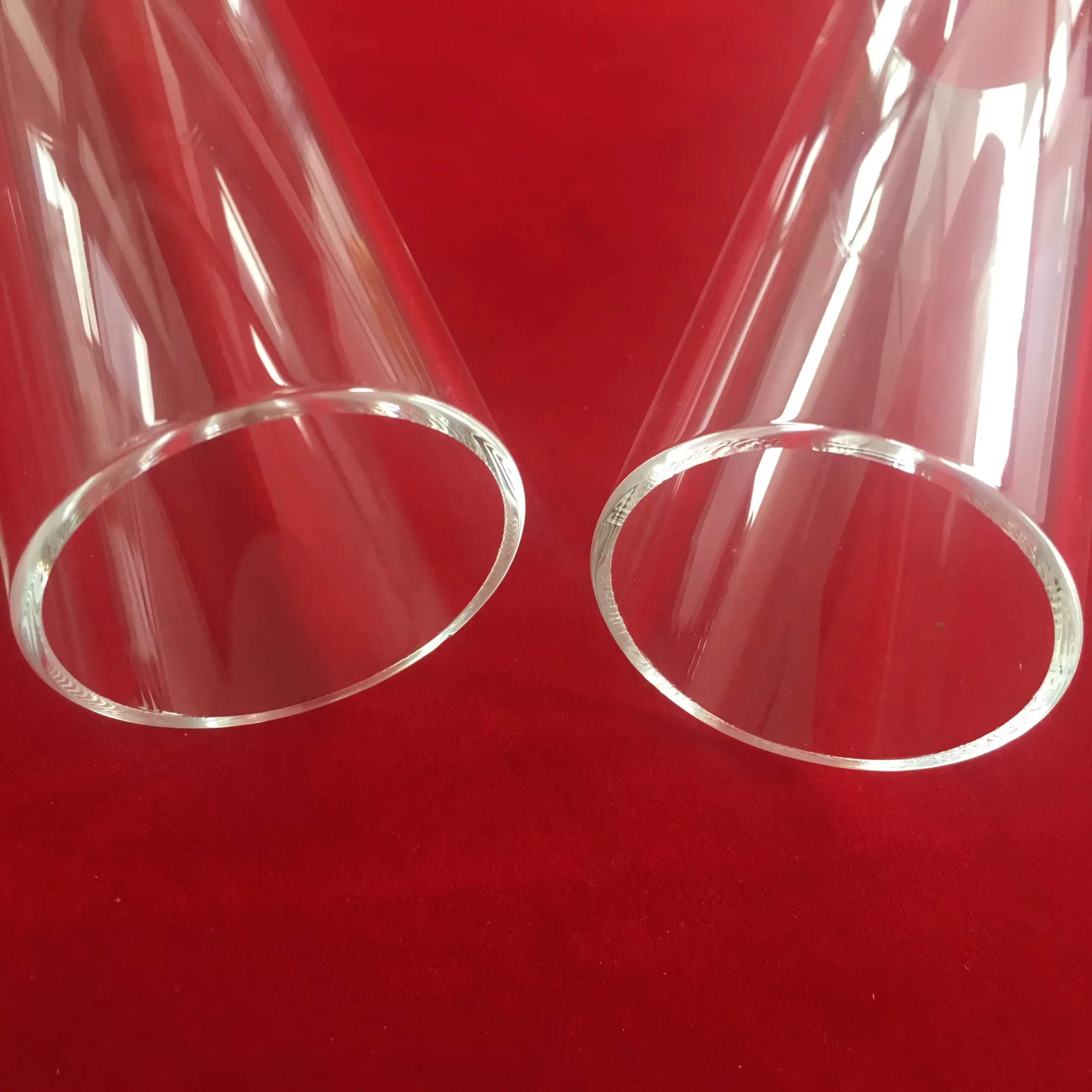
In the landscape of modern manufacturing and laboratory research, materials are constantly forced to survive conditions that would instantly destroy standard glass or metals. Whether it is inside a semiconductor cleanroom processing silicon wafers at $1,200^\circ\text{C}$, an industrial water treatment plant emitting heavy germicidal UV radiation, or a chemical laboratory handling boiling corrosive acids, there is one unsung hero that keeps these systems running: the quartz tube.
A quartz tube (or fused silica tube) may look like ordinary glass to the untrained eye, but its molecular structure makes it one of the most mechanically, thermally, and optically resilient materials on the planet. Let’s dive into what makes quartz tubes so exceptional and explore the critical roles they play across today’s cutting-edge industries.
The Science of Purity: Why Quartz Outperforms Ordinary Glass
To understand why a quartz tube is highly prized by engineers, we have to look at what is not inside it.
Standard laboratory or industrial glass (like borosilicate or soda-lime glass) contains various chemical additives—such as sodium, calcium, and boron. These additives lower the melting point, making the glass easier and cheaper to shape. However, they also severely weaken the material’s thermal and chemical resistance.
A high-quality quartz tube is made from amorphous silicon dioxide ($SiO_2$) with a purity level typically exceeding 99.9% (and up to 99.999% for semiconductor applications). By eliminating almost all metallic impurities, quartz gains a remarkably tight, interconnected molecular framework that gives it a unique set of superpower-like properties.
Key Performance Benefits of Quartz Tubes
When engineers choose a quartz tube for their machinery or experiments, they are investing in three core advantages:
1. Incredible Thermal Shock Resistance
Ordinary glass expands rapidly when heated and contracts sharply when cooled, causing it to shatter from internal stress. A quartz tube has a virtually non-existent coefficient of thermal expansion ($\approx 5.5 \times 10^{-7}/^\circ\text{C}$).
The Red-Hot Drop Test: You can heat a quartz tube with an industrial blowtorch until it glows cherry red ($1,100^\circ\text{C}$) and plunge it directly into ice-cold water. It will not crack, warp, or shatter. This incredible thermal stability makes it the only viable material for high-temperature furnace liners and heating elements.
2. High-Purity Chemical Inertness
Quartz tubes are highly resistant to chemical corrosion. They will not react with, dissolve in, or leach impurities into strong acids, bases, or organic solvents—even at elevated temperatures (with the sole exceptions of hydrofluoric and hot phosphoric acids). This absolute chemical inertness is critical for maintaining sterile environments in sensitive laboratory reactions.
3. Broad-Spectrum Optical Clarity
While standard glass blocks ultraviolet (UV) light, pure quartz tubes offer flawless optical transmission across a massive spectrum. They allow light to pass completely unobstructed from deep ultraviolet ($180\text{ nm}$) all the way through visible light into the infrared ($5\text{ }\mu\text{m}$) range.
Common Variations of Quartz Tubes
Depending on the specific industrial application, custom quartz tube suppliers manufacture these components in three primary structural forms:
| Tube Type | Primary Feature | Typical Applications |
| Clear Quartz Tubes | Maximum transparency, ultra-high optical clarity across UV-Vis-IR spectra. | UV germicidal lamps, thermocouple protection tubes, laser sleeves. |
| Opaque / Milky Quartz Tubes | Made with micro-air bubbles to scatter light; absorbs visible light while reflecting heat. | Infrared heaters, industrial baking ovens, diffusion furnace insulation. |
| Ozone-Free Quartz Tubes | Doped with trace titanium to block specific deep-UV wavelengths ($185\text{ nm}$) that generate ozone gas. | Safe indoor air sanitization, medical UV sterilization devices. |
Critical Applications Powering Modern Innovation
Because of this unique overlap of physical capabilities, quartz tubes serve as foundational components in several multi-billion-dollar industries:
- Semiconductor Processing: Inside fabrication plants, silicon wafers must be baked and treated with gases at extreme temperatures. Quartz diffusion tubes are used as the main process chambers because they can withstand the intense heat without off-gassing metallic ions that would contaminate the microchips.
- UV Sterilization and Water Treatment: Industrial water purification systems use high-intensity UV-C light to destroy the DNA of bacteria and viruses. Clear quartz tubes are used as protective jackets around the UV lamps, allowing the germicidal light to pass into the water with zero absorption loss while keeping the electrical components dry.
- Green Energy & Solar Manufacturing: The production of photovoltaic solar cells relies heavily on quartz processing tubes to handle the high-temperature chemical vapor deposition (CVD) processes required to coat solar wafers.
Final Purchasing Verdict
A quartz tube is much more than a simple piece of laboratory glassware; it is a precision-engineered industrial asset. Whether you require micro-bore capillary tubing for medical instruments, heavy-walled protection sleeves for industrial furnaces, or ultra-large diameter process chambers for semiconductor cleanrooms, matching the exact purity grade, dimensional tolerance, and edge finish to your thermal and optical environment is the key to maximizing system reliability and eliminating operational downtime.